The Art of Blank Is the Art of Making Womens Hats
Women's hats and head coverings in Great britain and in Europe have served as a functional protection from cold, the heat of the lord's day, and from industrial and wartime injury. They have, and can still, indicate rank and social place from the highest to the poorest. They can define a profession or trade and for hundreds of years take reflected a woman's personal encompass of current fashion of her twenty-four hour period. The wearing of elegant hats however was, and indeed is, a complex sartorial conundrum.
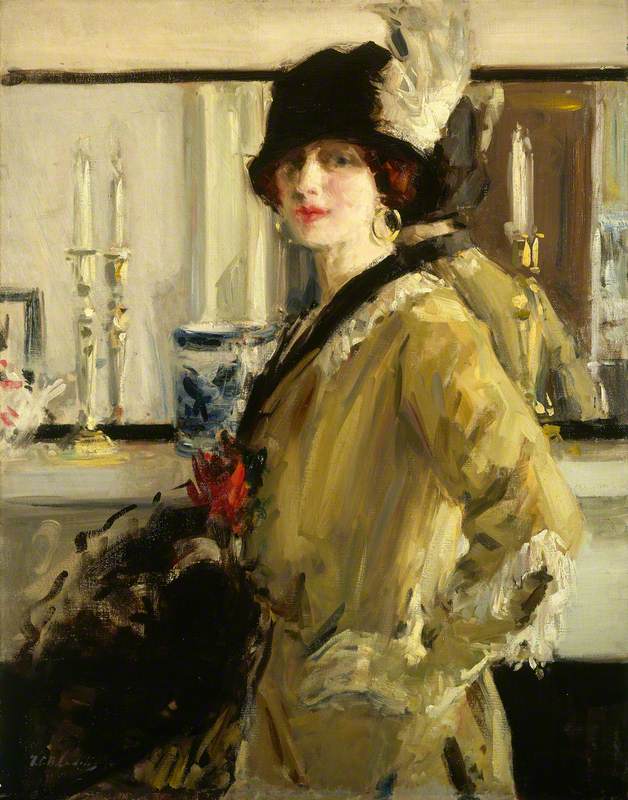
The Black Chapeau 1914
Francis Campbell Boileau Cadell (1883–1937)
Museums & Galleries Edinburgh – City of Edinburgh Council
Equally in the past – and so in the present – not only does the lid take to be correctly styled for the specific social occasions (morning or afternoon vesture, cocktail, wedding ceremony, funeral summertime and winter styles, etc.) but it has too to be worn correctly on the head in order to demonstrate a proper agreement of right social savoir faire. Personal public humiliation could even be the consequence of wearing a lid at the incorrect angle, perhaps too far on the back of caput when it should have been worn over the brow. This was far truer in the nineteenth century and upwardly to the 1960s when all women who could afford to do then wore hats out of doors, even but to become shopping.
There were also strict rules on the use of decorative indoor caps of muslin, lace and ribbon, for day and evening: and on very patently indoor caps for widows, seen and then often in portraits of eighteenth- and nineteenth-century women. Hat styles in the nineteenth and twentieth century were created by the famous milliners of Paris and London, with styles irresolute every season and images diffused widely through manner magazines.
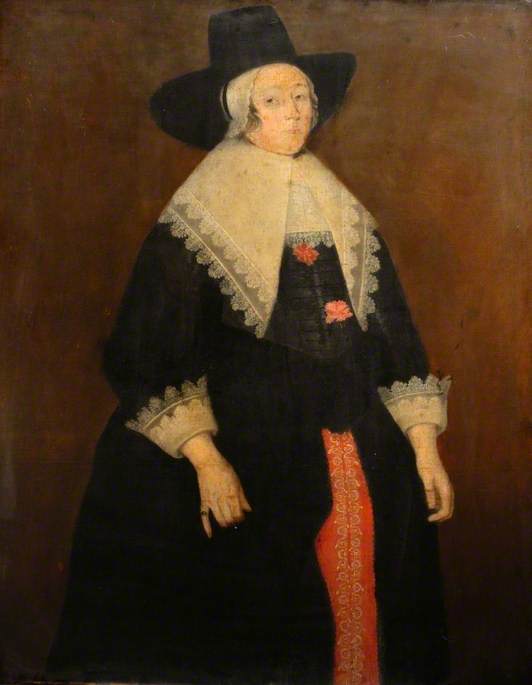
Hats in portraits of women reflect all of these functions and etiquettes, though in Europe from the sixteenth century far fewer had their portraits painted than men, unless they were royal, or aristocratic, or scandalous. Other women achieved the status of a personal portrait from the eighteenth century onwards if their family unit and husbands were wealthy. Some few were painted if they had excelled publicly in some mode – on the phase, and past the after nineteenth century in the world of academia, politics, sport, local government, literature or medicine, for example. Poor and land women were painted often at their work, past genre artists, keen to catch the graphic symbol of worn faces and crude, unfashionable clothing. Portraits of women who had committed acts of great bravery in wartime are also to be found too in our museum and galleries.
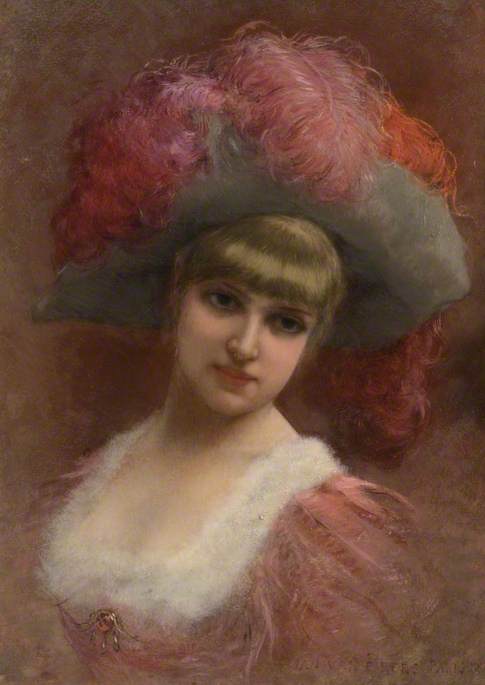
Many portraits also however simply celebrated the fashionability and elegance of the hats of comfortably off women, providing a lasting memory space through which to celebrate the creativity of milliners, whether professional or amateur. From the mid-eighteenth century, once versions of fashionable clothes were seen in the clothes of middling class women, milliners vied to produce the latest, newest hat styles, using the latest faddy in hat fabrics and trimmings: the finest woven straws from Italy and the East of England; exotic silk fabrics and jewels from India fabricated into turbans; perfectly made silk flowers of every blazon and size; and plush feathers from peacocks, hummingbirds and egrets. Ostrich plumes were a particular favourite because of both their high price and the beautiful movement of their soft fronds.

Summer beach hat design: red flowers on white straw
1962, gouache & pencil by Lou Taylor
With all this in mind, here is a choice of images from Art United kingdom to gloat the use of hats by women in United kingdom of great britain and northern ireland from the early sixteenth century onwards.
Bejewelled hats and headdresses
Amongst the really rich, hats could exist trimmed with all kinds of exotic jewellery, even through to the twentieth century.
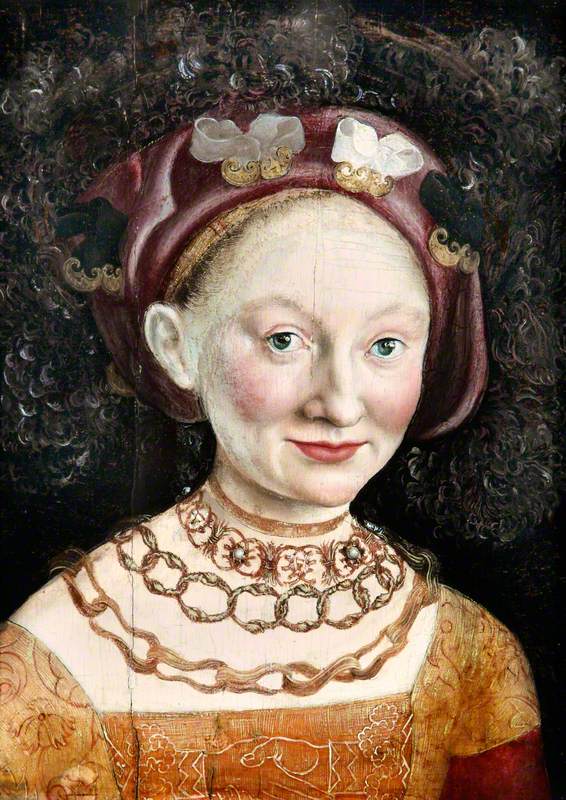
Emilia was one of 3 daughters of Duke Heinrich of Frommen, and is shown here wearing gold lace bows and braiding in her turban-fashion hat, with four gold necklaces effectually her throat and shoulders.
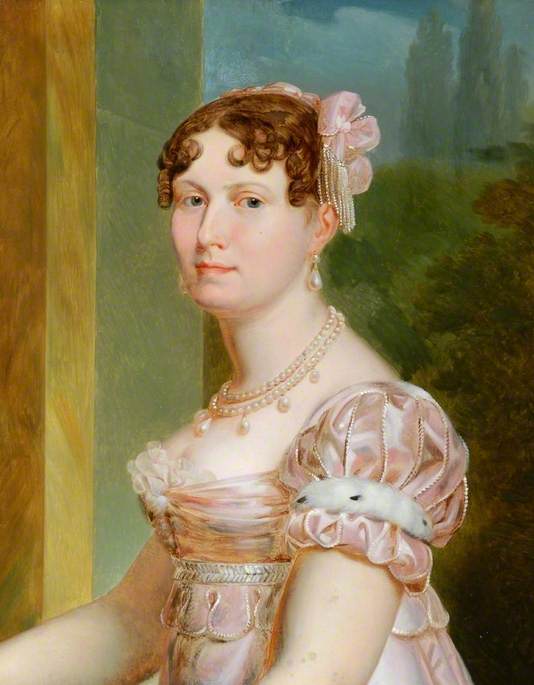
Queen Catherine wears a highly fashionable pink silk headdress designed to match her loftier-waisted apparel. Rows of small luxurious pearls dangle over her ear.
Hats and ostrich plumes
Ostrich plumes were a particular favourite hat and fan trimming from the sixteenth century. They were extremely fashionable and vastly expensive in the late eighteenth century, imported from Africa and much favoured by Queen Marie Antoinette and the women at her court.
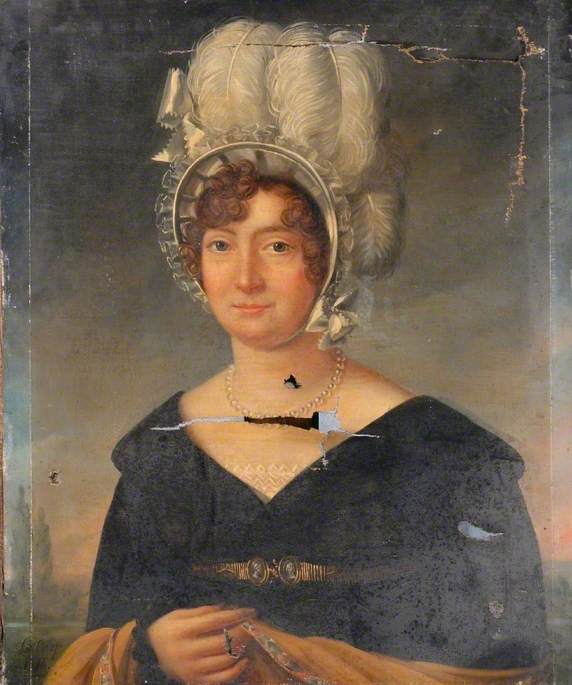
This painting offers a clear image of a fashionable hat of the Regency period trimmed with white satin ribbons, lace and beautifully drooping white ostrich plumes.
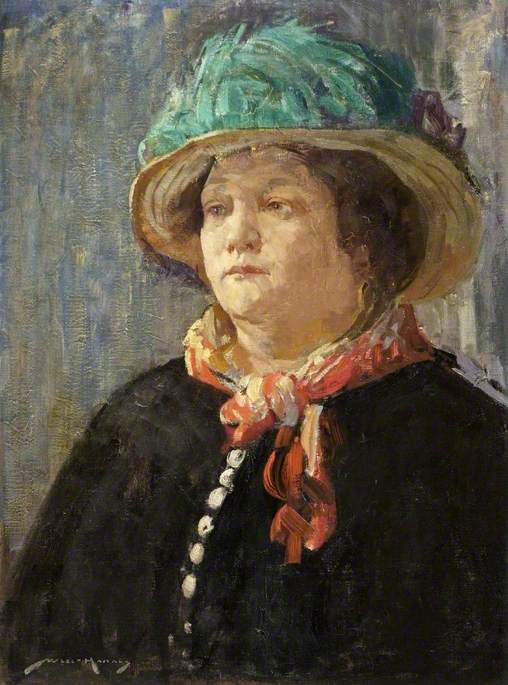
The creative person has focused on the brightness of the turquoise-blue feathers on the somewhat dilapidated straw hat worn past this street flower seller as a marker of her trade. Past this date, ostrich feathers were imported into London in large quantities and qualities from S Africa. She was a precursor of the coster-girls, then oftentimes drawn past Phil May, at the turn of the nineteenth century, famous for their neatly fitting gear up-made tailored costumes and the huge bright ostrich plumes on their large hats.
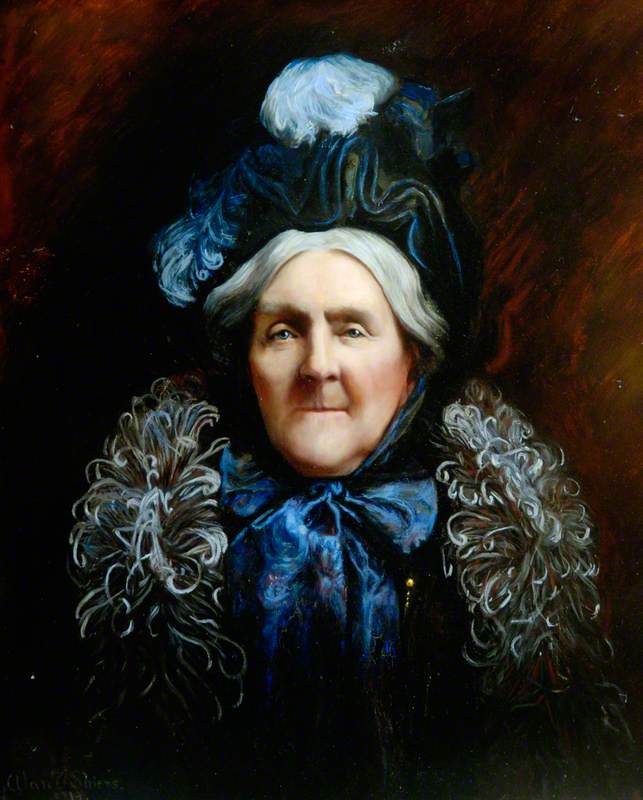
This bonnet, nigh 20 years out of date for its day, shows the use of curled ostrich feathers in the stole and shaded feather, from white to nighttime blue in her hat, which is virtually ten–20 years out of appointment in way. Miss Easton died on Christmas day in 1914 at the age 95, and left jewellery and furniture to her companion, £3,000 to her gardener and £10,000 to Newcastle Medical College. The portrait is dated to 1914 and might take been commissioned later her death.
Hats for weddings and funerals
Correct hat etiquette was a deep business at public events such every bit weddings and funerals.
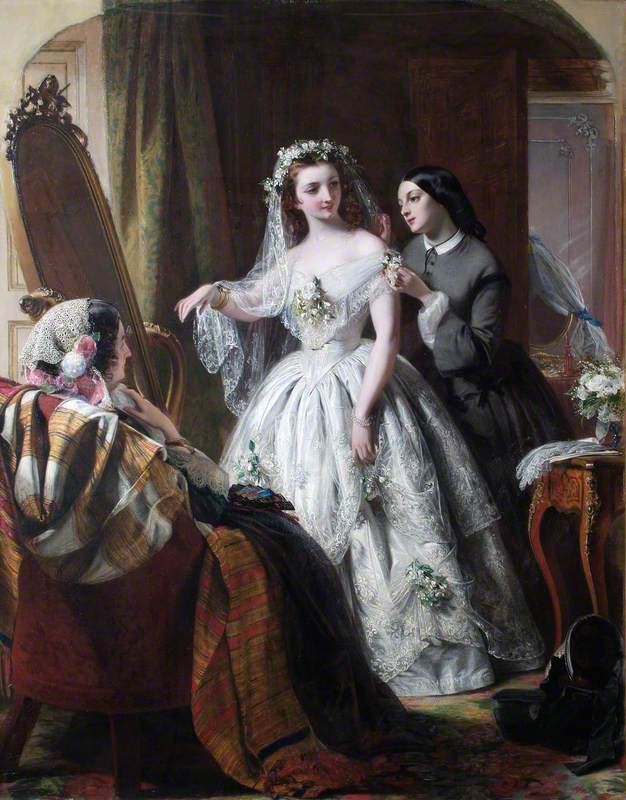
This scene shows a bride existence fitted for her nuptials dress past her dressmaker, whilst her mother looks on. Past the mid-ninteenth century, well-off brides married in white, with headdresses of wax orange blossoms under long silk net veils or lace veils.
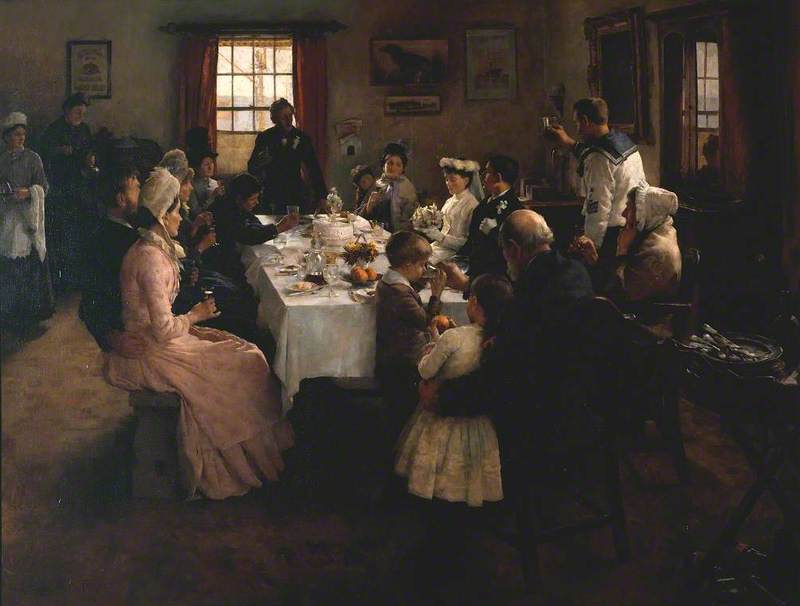
As the leading genre creative person of the Newlyn School, Stanhope Alexander Forbes painted many aspects of the lives of Cornish line-fishing communities. Here he celebrates a wedding in an inn: the groom in his crewman's compatible, some guests, perchance the bridesmaids, in smart styles, and the bride, all in white with a charming wreath of white flowers and veil.
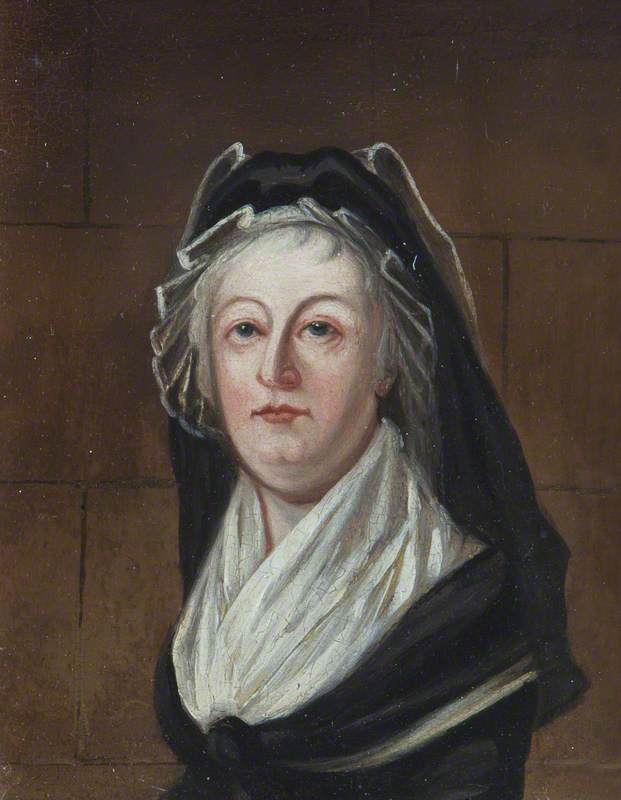
Subsequently the execution of her husband Louis Xvi on January 21st 1793, Queen Marie Antoinette, imprisoned in the Temple, Paris, was famously sketched by Kucharski. She wore formal court mourning for the concluding ix months of her life. One time so renowned for her extravagant ostrich plume-plumed hats, hither she wears an etiquette-right black veil probably of silk crepe, with plain white edging. She was executed on 16th Oct 1793.
Hats and lace
Lace has been a fundamental status element in hat decoration over many centuries, with lace qualities varying from the almost expensive handmade designs of the sixteenth to nineteenth centuries, downwards to mass-product yardage. Depicting the fineness and intricacy of costly lace posed a specific chore of accurateness to painters.
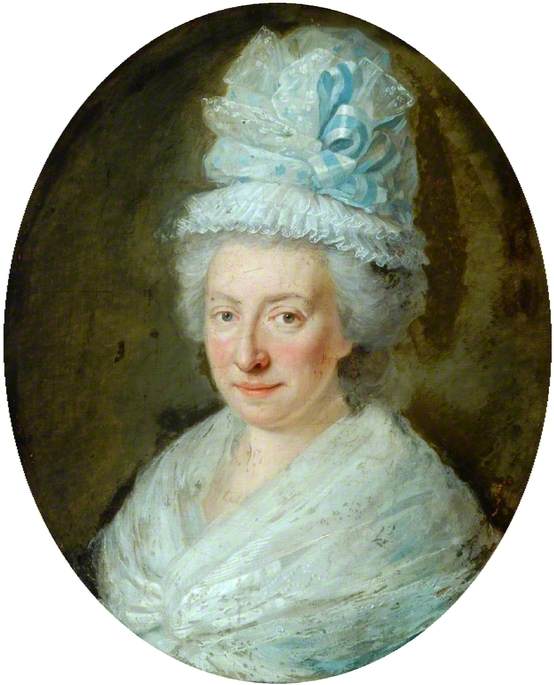
This portrait reflects the fashion for remarkably alpine hair styles in the 1770s. Information technology shows a fashionable elderly woman wearing a high chapeau trimmed with lace, swathes of soft silk and a striking blue and white ribbon, over her powered hair.
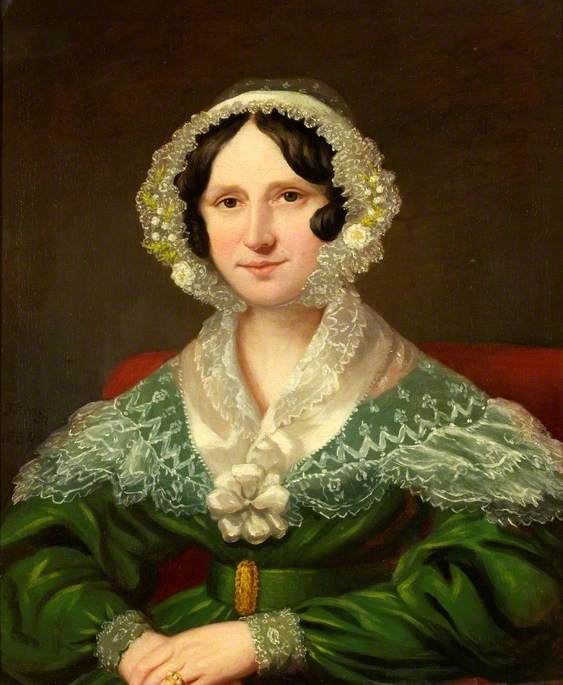
Margaret, née Salter (1780–1863), was the wife of William Stancome, a well-off clothier from Trowbridge. She is shown here wearing a most becoming indoor cap, with her fashionable green silk, balloon-sleeved dress with its fine-blonde lace shoulder shawl. Her elegant petty lace-trimmed cap features white bogus silk roses and small, leafy rose buds around her ears.
Women at work
Women's hats and head coverings can indicate, every bit shown in these examples, profession, trade and class. They can also indicate fashionability, age, nationality and even dissident rejection of the accustomed styles of the twenty-four hour period.
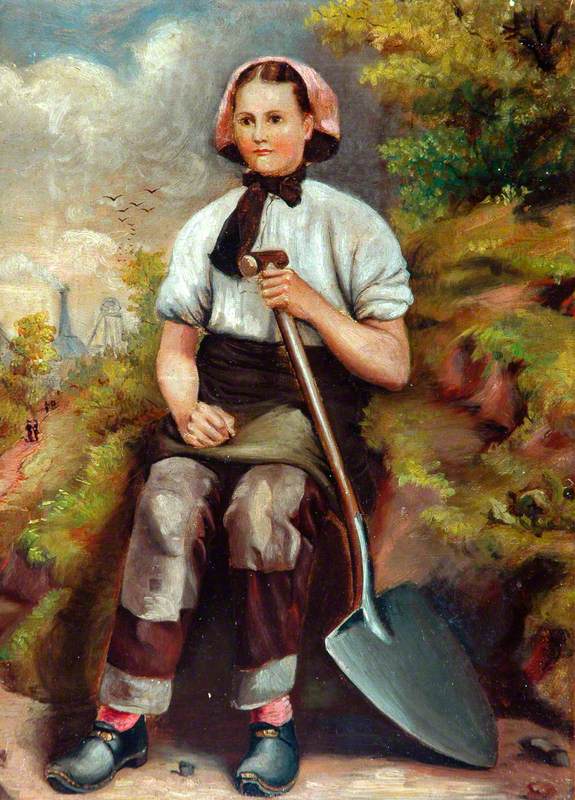
Once laws were established in 1840 which banned women from underground work in coal mines, many undertook heavy shovelling work higher up ground at collieries in Wales, Scotland and England through to the early twentieth century. Whilst some women wore long sturdy skirts, others wore men's trousers with thigh-length short sacking skirts, rough blouses and hob-nailed clogs or boots. Their pilus was always covered as protection from coal dust and filth, either with short tied-dorsum scarves, rough habitation-made hats, or fringed shawls. This rare oil portrait shows a pit forehead daughter wearing a hat, probably dwelling-made, fabricated of pink cloth tied securely under her mentum with a black bow. (See Alan Davis' 2002 book The Pit Brow Women of Wigan Coalfield, published by The History Printing for more information.)
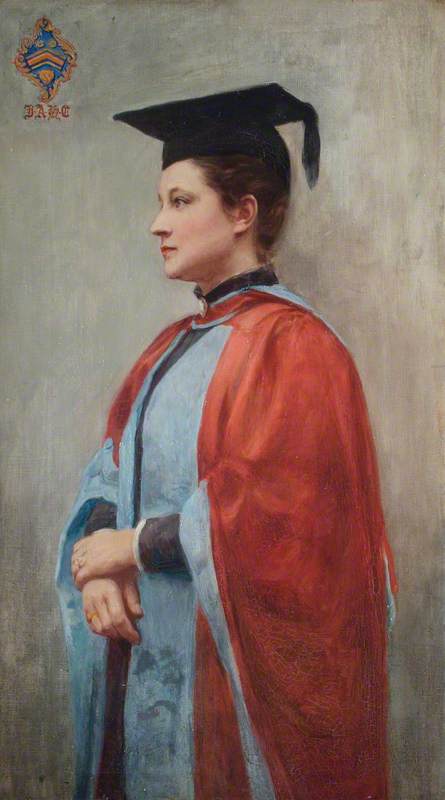
Julia Anne Hornblower Cock (1860–1914), MD, studied at Bedford Higher in the early 1880s, and by 1891 was a qualified physician living at Manchester Square, Marylebone in London. In 1896 she taught as a lecturer at the London (Imperial Free Infirmary) School of Medicine for Women. In 1903 she became Dean of the college, replacing Elizabeth Garrett Anderson, who had been Dean since 1883. In 1877 the Royal Costless Hospital was the first teaching infirmary in London to admit women for preparation. She is shown hither in the formal university robes of a Dean, wearing her mortar board.
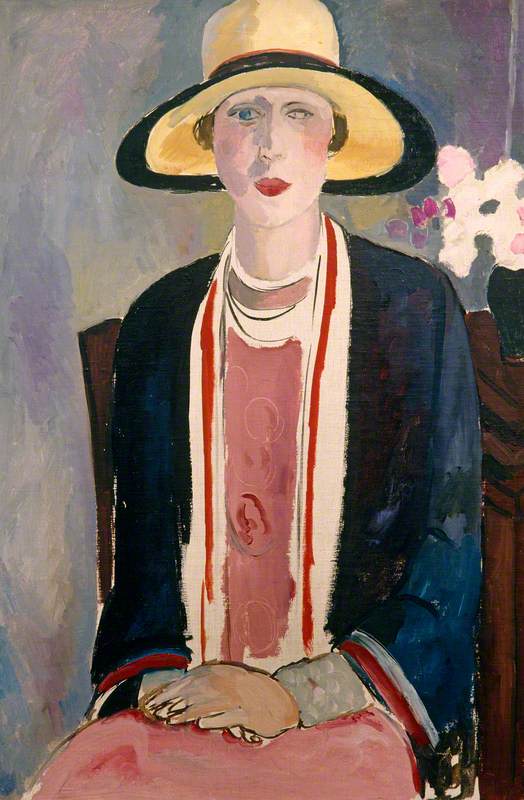
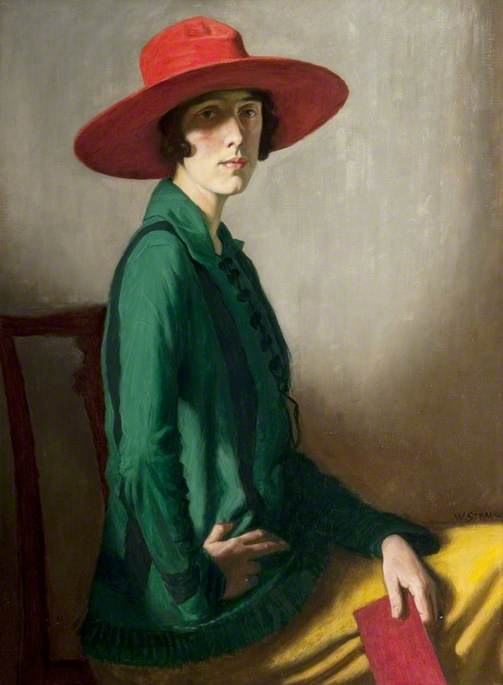
Madge Garland was ane of Britain'south most famous fashion and interior design journalists and writers. She took over the editorship of English Faddy in 1933 and founded the Fashion programme at the Royal Higher of Art in 1947. This portrait presents her every bit profoundly smart – every inch the fashion editor – in the fashionable sportive manner of summer leisure article of clothing of the late 1920s, typified past her large straw hat merely besides by her faux-coincidental pinkish apparel and night blue jacket.
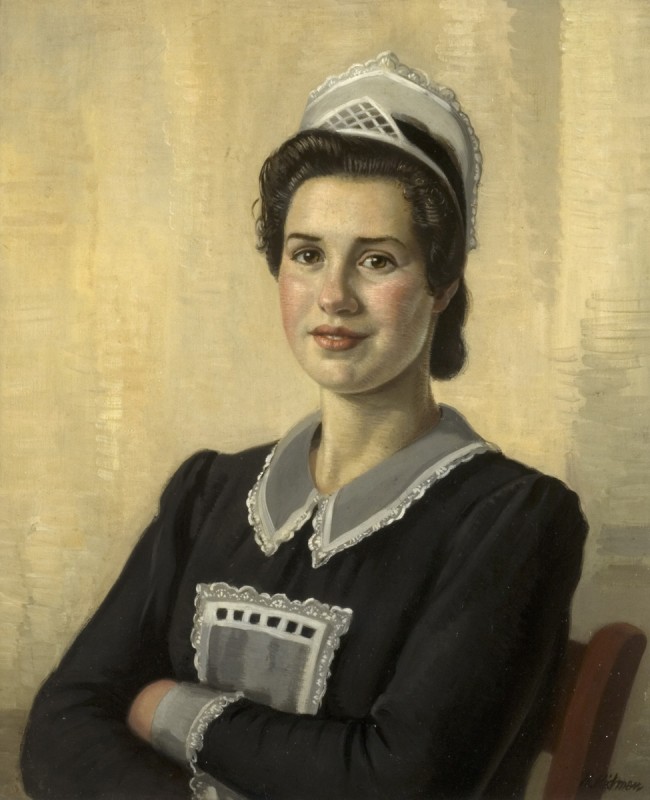
This portrait shows a immature woman wearing the uniform of a waitress, in 1941, in the third year of the 2d World State of war. She wears a black compatible dress with a starched white cotton uniform cap, trimmed with broderie anglaise lace and open work, matching her collar, apron and cuffs. By December, once women aged xx–xxx were called up for war service, unless she had children, this woman was probably recruited to play a far more than active role in the Second World State of war.
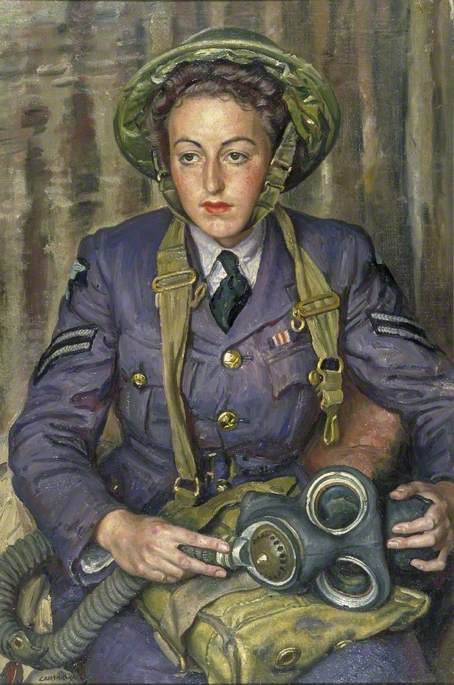
Josephine Maude Gwynne Robins is shown with her protective tin helmet, her blueish WAAF uniform and with a gas respirator on her lap. The WAAFS were established in 1939. The London Gazette of 20th December 1940 reported that: 'Corporal Robins was in a dug-out which received a directly hitting during an intense enemy bombing raid. A number of men were killed and two seriously injured. Though dust and fumes filled the shelter, Corporal Robins immediately went to the assistance of the wounded and rendered first aid. While they were beingness removed from the demolished dug-out, she fetched a stretcher and stayed with the wounded until they were evacuated. She displayed courage and coolness of a very loftier order in a position of farthermost danger.'
Lou Taylor, Professor of Dress and Material History, Academy of Brighton, and Dress and Textiles Grouping Leader for Art Detective
Farther reading
Sarah Abrevaya Stein, Plumes: Ostrich Feathers, Jews and the Lost World of Global Commerce, Yale Academy Press, 2008
Stephen Jones, Hats: An Anthology, V&A Publishing, 2012
More stories
Artworks
Source: https://artuk.org/discover/stories/a-celebration-of-womens-hats-in-art
0 Response to "The Art of Blank Is the Art of Making Womens Hats"
Postar um comentário